Friday, April 26, 2013

Vaginal Itching or Burning "Makati at Mahapdi" : Candida Vulvovaginitis


A 28 -year old mother of two, consulted for persistent itching and burning sensation " makati at mahapdi " at the genital area of one week duration with associated thick 
whitish vaginal discharge. Patient also complains of pain during urination and sexual intercourse.


On physical examination, there is edema and erythema of the vestibule, the labia majora and the labia minora. Some of the rash extended to the inner thighs and perineum. A white, thick, curd like, non foul-smelling  vaginal discharge is also present .The medical history and thorough physical examination convinced me that the patient is suffering from. Vaginitis, most probably Candida Vulvovaginitis . Patient 
was prescribed a single  oral dose of Fluconazole 150mg tablet and  to use Povidone-Iodine Feminine wash  2-3x a day until symptoms subsides.

Patient was also advised to wear loose-fitting clothes and use cotton underwear and if possible refrain from wearing underwear during bedtime to avoid the warm and moist climate which is conducive to the growth of Candida. Clinic follow-up after one week was also advised.

Infection of the vagina or vaginitis is considered the most common gynecological condition seen in the clinic and it is usually diagnosed based on the presence vaginal discomfort , abnormal discharge or both. To maintain a normal healthy environment in the area, a daily vaginal discharge flows that is normally clear and odorless. Variance in the color , smell, amount, consistency of the discharge and additional burning or itching sensation could mean an imbalance of healthy bacteria in the vagina thus causing vaginitis.

Bacterial vaginosis accounts for 40-45%  while vaginal vulvovaginitis is second with 20-25% and lastly trichomoniasis at 15-20% for all cases of symptomatic vaginitis. A lot of cases are also mixed infections.

In vulvovaginal candidiasis, the causative agent belongs to the genus Candida, which is found in most  humans and many animals. Conditions can be acute , chronic, and recurrent and may prove to be a challenge to some practitioners. There are some factors that predisposes to the growth of Candida  and pregnancy is the most common condition. High doses of estrogens in some contraceptives also increase  vaginal colonization by Candida. Use of antibiotics, more so the prolonged use,  and also decreased or altered immune response and diabetes mellitus predisposes  one to Candida vulvovaginitis.

The prominent symptom in acute vulvovaginitis  is pruritus and burning sensation in the vulvar area and is aggravated during urination and after sexual intercourse. 
Management and treatment involves the use  of anti-fungals, both vaginal suppositories and oral tablets. Feminine wash are also prescribed to maintain the ideal vaginal ph.


Images from A.D.A.M., Google Images.

Disclaimer:
Articles on this blog should be taken for informational purposes only and is not intended to replace actual medical advice and consultation with a physician and other health practitioners.

Wednesday, October 3, 2012

Doc, what is Chikungunya?


Doc, what is Chikungunya?
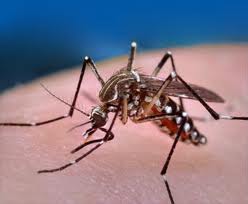
Chikungunya is a viral disease that is transmitted by infected mosquitoes, specifically Aedes aegypti(same vector of Dengue virus). Affected patients have abrupt onset of fever and  complains of severe joint pain. Asymptomatic incubation period usually last 2-4 days but may last for up to 12 days, then followed by symptoms that include muscle pain, headache, nausea, fatigue and rash. The disease shares some clinical signs with dengue, and can be misdiagnosed in areas where dengue is common like the Philippines.

 "Chikungunya"  in the Kimakonde language, means "to become contorted" and describes the slumped or stooped appearance of sufferers with joint pain. Chikungunya virus was first isolated in Tanganyika (now Tanzania) in 1953 and later on epidemics were reported in West and Central Africa, similar outbreaks were reported in Southeast Asia and the Western Pacific.According to the World Health Organization (WHO), Chikungunya occurs in Africa, Asia and the Indian subcontinent. Human infections in Africa have been at relatively low levels for a number of years, but in 1999-2000 there was a large outbreak in the Democratic Republic of the Congo, and in 2007 there was an outbreak in Gabon.
    There is no known cure for the disease and treatment is only supportive and focused on relieving the symptoms like giving Paracetamol for fever, Non-Steroidal Anti-inflammatory drugs (NSAIDs) for joint and muscle pain, Oral Rehydrating Salts (ORS) for dehydration.
     The use of topical insect repellents is recommended but active substance concentration, surface of the skin to protect, number of daily applications and length of use should be taken into account. Infants less than two months old should not be given topical repellents.


Image from Vectorbase.org
Google Images

Thursday, August 9, 2012

Leptospirosis


Doc, can I be infected with Leptospirosis by just wading through the floodwaters? Leptospirosis is a disease that is caused by pathogenic spirochetes of the genus Leptospira, often acquired by human via contact with fresh water contaminated by rat, bovine, or canine urine. The disease is also acquired during adventure travel or vacations that involve water sports or hiking, or even as a consequence of flooding (by wading through floodwater) which is the usual case here in the Philippines. Pathogenic spirochetes is passed via infected animals urine (commonly rats in flooded places) which penetrates broken skin, wounds, mucus membranes and even conjunctiva.Persons at high risk are primarily those expose to fresh water flooding , rescuers during flood calamities, workers working in flooded construction sites, fresh water activities like farming, hiking and swimming across streams.Sign and symptoms of persons infected with Leptospirosis follows a 7-12 day incubation period, wherein in 90% of cases are Anicteric Leptospirosis . High fever( Temperature > 38 centigrade), headache, muscle pain, conjunctivitis(red eyes), skin rash are the most common complaints. Patients may also exhibit hepatomegaly and splenomegaly.In the other 10% of cases, persons may suffer a more severe Icteric Leptospirosis (Weil's Syndrome) wherein there is usually fever , jaundice(yellow skin),icteric sclera, hypotension, azotemia, hemorrhagic vasculitis.The PSMID or Philippine Society for Microbiology and Infectious Diseases, Inc. came out with antibiotic chemoprophylaxis that may be given to persons at risk.A) LOW RISK individuals are those with a single history of wading in flood or contaminated water and absence of wounds, cuts or open lesions of the skin.Doxycycline (hydrochloride or hyclate) at 2 capsules of 100 mg single dose within 24 to 72 hoursB) MODERATE RISK individuals are those with a single historyof wading in flood or contaminated water and the presence of wounds, cuts,or open lesions of the skin, OR accidental ingestion of contaminated water.Doxycycline (hydrochloride or hyclate) at 2 capsules of 100 mg OD for 3-5 days to be started immediately within 24 to 72 hours from exposure.C) HIGH RISK individuals are those with continuous exposure(defined as those having more than a single exposure or several days such as those residing in flooded areas, rescuers and relief workers) of wading in flood or contaminated water with or without wounds, cuts or open lesions of the skin. Swimming in flooded water and ingestion of contaminated water are also considered high risk.Doxycycline (hydrochloride or hyclate) at 2 capsules of 100 mg once weekly until the end of exposureIt should be emphasized that before taking such prophylaxis , the patient should consult a physician so that contraidications and side-effects of the drug be fully explained and also be it known that antibiotic prophylaxis are not 100% effective.The most effective preventive measure is avoid wading in floods and contaminated water and if this can not be avoided, wear boots, goggles, overalls and rubber gloves, and also wash with soap and water, and if possible apply disinfectant after exposure.Leptospirosis treatment is primarily with antimicrobial therapy and supportive treatments (eg. Paracetamol for fever). In uncomplicated infections that do not require hospitalization, oral Doxycycline has been shown to decrease duration of fever and most symptoms. Patients admitted in hospitals should be treated with intravenous penicillin G therapy.
Images from Google, DOH Website

Thursday, August 2, 2012

Luslos or Hernia


Doc, i have this painless bulge on my balls, may luslos po ba ako?

A 24 year old male came to the clinic complaining of a painless bulge on his scrotum or balls which was on an off for more than a month. After taking a thorough medical history and physical examination, the patient was diagnosed as having Luslos or Indirect Inguinal Hernia.
A hernia, as defined by Astley Cooper in 1804, is a protrusion of any viscus from its proper cavity. The protruded parts are generally contained in a sac-like structure, formed by the membrane with which the cavity is naturally lined. A hernia occurs when part of an organ (usually the intestines) protrudes through a weak point or tear in the thin muscular wall that holds the abdominal organs in place.Inguinal hernia appears as a bulge in the groin or scrotum. This type is more common in men than women.
As in this patients case, Indirect Inguinal Hernia(the most common) follows the tract through the inguinal canal that results from a persistent process vaginalis. The inguinal canal begins in the intra-abdominal cavity at the internal inguinal ring, located approximately midway between the pubic symphysis and the anterior iliac spine. The canal courses down along the inguinal ligament to the external ring, located medial to the inferior epigastric arteries, subcutaneously and slightly above the pubic tubercle. Contents of this hernia then follow the tract of the testicle down into the scrotal sac.
On the other hand, a Direct Inguinal Hernia usually occurs due to a defect or weakness in the transversalis fascia area of the Hesselbach triangle. The triangle is defined inferiorly by the inguinal ligament, laterally by the inferior epigastric arteries, and medially by the conjoined tendon.
Inguinal hernia accounts for 96% groin Hernias while the other 4% are Femoral hernia. The gender predisposition is Male with a 9 to 1 ratio and is bilateral in 20% of cases. Children account for 5% of Inguinal Hernia cases.
Once the diagnosis is confirmed, Herniorrhaphy,is recommended which is opening the hernial sac and returning the contents to their normal place, obliterating the hernial sac, and closing the opening with strong sutures.


Images from Google.

Wednesday, July 11, 2012

Enterovirus 71 can cause Hand, Foot and Mouth Disease


Doc, What is Enterovirus 71 and does it cause Hand, Foot and Mouth Disease?

Enterovirus 71 (EV-71), is a virus which causes hand, foot and mouth disease (HFMD). The EV-71 has been known to generally cause severe complications among some patients infected with (HFMD)
Hand-foot-and-mouth disease ,also known as Herpangina, is an acute viral illness that presents as a vesicular eruption in the mouth. HFMD can also involve the hands, feet, buttocks, and/or genitalia. Coxsackievirus A type 16 (CV A16) is the etiologic agent involved in most cases of HFMD, but the illness is also associated with coxsackievirus A5, A7, A9, A10, B2, and B5 strains. Enterovirus 71 (EV-71) has also caused outbreaks of HFMD with associated neurologic involvement in the western Pacific region, which includes Southeast Asia and recently Cambodia.
The human enteroviruses are existing viruses that are transmitted from person to person via direct contact with virus shed from the gastrointestinal or upper respiratory tract. The enteroviruses belong to the Picornaviridae family of viruses and are traditionally divided into 5 subgenera based on differences in host range and pathogenic potential.[1] Each subgenus contains a number of unique serotypes, which are distinguished based on neutralization by specific antisera. The subgenera include polioviruses, coxsackievirus (groups A and B), and echoviruses.
Symptoms include vesicles in the mouth, hands, feet and bottoms sometimes appearing as blisters. Signs involves football shaped vesicles n the buccal, toungue and posterior pharynx.
There is no specific treatment for HFMD,in fact no anti viral therapy is recomended except for supportive therapy. Paracetamol may be given for pain and fever while Antihistamines (Cetirizine, Diphenhydramine) maybe given for pruritus. It should be noted however that patients with CNS manifestations (eg, encephalitis, aseptic meningitis) may require hospitalization.

Photo courtesy of Pediatricsconsultative.com
Photos and images compiled from Google.com

Thursday, June 14, 2012

WHO issues Fresh Alert for Gonorrhea


June 7, 2012 By Anisha Francis, DC Chennai
Deccan Chronicle

The World Health Organisation on Wednesday issued a fresh alert on a drug resistant type of gonorrhoea, a common sexually transmitted disease, warning that a strain resistant to the very last line of antibiotic treatment had been found.

Doctors in Chennai, however, report that they have been receiving “superbug” gonorrhoea cases since the early 2000s, thanks to overzealous cephalosporin antibiotics prescriptions.

Gonorrhoea is a bacterial infection and initial symptoms include penile discharge and burning sensation in men, while 50 per cent of women do not have any significant symptoms.

Dr Manjula Lusti-Narsimhan of the WHO’s department of reproductive and sexual health announced that the organisation was drawing up a global action plan to combat the superbug, which could pose a public health challenge.

“Gonorrhoea used to be an easily manageable disease, but difficult-to-treat strains have now emerged. This is mainly because of the irrational use of antibiotics like Cephalexin by both patients and physicians.


General practitioners prescribe this drug for so many different ailments — diarrhoea, sore throat, respiratory and urinary infections — that the gonorrhoea bacteria has developed resistance,” explained Dr N. Kumarasamy, Chief Medical Officer at Y.R.G. Care here, which specialises in HIV and other STIs.

“If not treated, gonorrhoea can cause the urethra to constrict in both men and women. Infertility and pelvic inflammatory disease can also occur.

The infection can cause severe vision problems in infants born to infected mothers, as they can contract the bug as they pass through the birth canal,” he added.

At the Government General Hospital’s STI clinic, most patients with gonorrhoea are young, in the 20- 35 age group, said counsellor Mr Wilson.

“It is not sex workers or homosexual men from the ‘high risk groups’ who come here with gonorrhoea; they are well aware of how to protect themselves from STDs. It is the uninformed general public, mostly young men and often married couples who come for treatment,” he said.

Many patients, meanwhile, admit that they first try over-the-counter antibiotics “prescribed” by salesmen at the medical shop and visit the venerologist only when the symptoms get worse.

Tuesday, June 5, 2012

Vascular Reactivity in Pre-Diabetes Improves With Regular Aerobic Exercise


Vascular Reactivity in Pre-Diabetes Improves With Regular Aerobic Exercise
By Fran Lowry


NEW YORK (Reuters Health) Jun 01 - People with pre-diabetes who engage in regular aerobic exercise improve their vascular reactivity to nearly normal levels, even if they do not lose weight, researchers said in Philadelphia last weekend at the American Association of Clinical Endocrinologists 21st Annual Meeting and Clinical Congress.


"Doctors should tell their patients with pre-diabetes to do moderate exercise," lead author Dr. Sabyasachi Sen, from Bay State Medical Center and Tufts University School of Medicine in Boston told Reuters Health.


"The patients in this study did what the American Diabetes Association recommends, 150 minutes of aerobic exercise a week at 70% of their maximum heart rate, and showed improvement in several of their lipid fractions and their vascular reactivity," he said.


There is a lack of data on endothelial function in pre-diabetes, although there is a fair amount in the literature confirming endothelial cell dysfunction and poor vascular reactivity in diabetics.


In a randomized crossover trial, Dr. Sen and his team studied 20 exercise-na�ve subjects with pre-diabetes aged 45 to 65, with body mass index ranging from 25 to 34.9.


Ten subjects did 150 minutes per week of aerobic exercise for six weeks, and 10 did no exercise. After a four-week washout period, the groups switched. The investigators studied endothelial function in both groups with flow mediated dilatation (FMD) of the brachial artery. They also looked at endothelial, bio-inflammatory markers and blood pressure, fasting lipids, insulin, and glucose.


The mean FMD in the no-exercise phase was 5.7%. After exercise, the FMD improved to 11.2%.


No weight loss was noted, but there were statistically significant reductions in leptin, interleukin-6, high sensitivity-C reactive protein (hs-CRP), tumor necrosis factor (TNF), fasting triglyceride, low-density lipoprotein, and ApoB levels with exercise, Dr. Sen said.


In addition, insulin sensitivity as measured by homeostatic model assessment (HOMA) and Apo-A1 improved after exercise. However, fasting glucose levels, HbA1c, and high density lipoprotein (HDL) cholesterol levels did not change.


Without exercising, pre-diabetic patients had vascular reactivity levels as poor as those in patients with overt diabetes, Dr. Sen said.


"Knowing that exercise significantly improves vascular reactivity for pre-diabetic patients is substantial," he said. "The pre-diabetic stage is a therapeutic window when aerobic exercise can make significant improvement in vascular reactivity and bring it back towards normalcy, before these patients progress to overt diabetes. It may be too late in the overt diabetes stage to make significant impact in vascular reactivity with exercise alone."


Image from TopNewsHealth